







How do you drastically reduce US 3PL kitting costs for a Kickstarter card game?
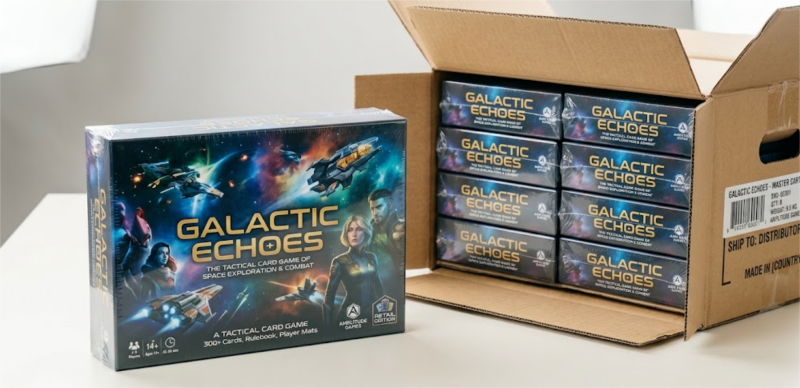
The most effective way to reduce US 3PL assembly costs is to never let them assemble your game. Sending unassembled components (cards, rigid boxes, rulebooks) to a US warehouse will incur exorbitant “per-touch” kitting fees, often exceeding $3.50 per unit. To maximize Kickstarter margins, developers must partner with a manufacturer that provides All-in-One Kitting. By conducting 0.3mm precision assembly, shrink-wrapping, and master-carton packing on the factory floor before export, your 3PL only needs to apply a shipping label, slashing fulfillment costs by up to 80%.
The Post-Kickstarter Nightmare: Congratulations, You’re Broke
You did it. Your Kickstarter campaign hit 300% of its funding goal. The art is gorgeous, the community is buzzing, and the comments section is filled with backers eagerly awaiting their decks. You feel on top of the world.
Then, you sit down with your spreadsheets to plan the actual fulfillment. You look at the quotes from US-based third-party logistics (3PL) warehouses for assembly and “kitting,” and a cold dread pools in your stomach.
You realize that your hard-earned Kickstarter profit margins are about to be completely swallowed by a quiet, margin-killing line item: the “per-touch” fee.
Most independent creators make a fatal mistake during their first launch. They treat the printing factory and the fulfillment warehouse as two completely separate worlds. They print the cards at one factory, buy the rigid boxes from another, print the guidebooks somewhere else, and ship all these loose, unassembled pieces to a warehouse in California or Texas to be put together.
The Hard Reality of Crowdfunding Logistics
We’ve seen too many brilliant creators lose their hard-earned funding to these hidden fees. By the time the final invoice arrives, they aren’t celebrating a successful campaign—they’re trying to figure out how they ended up losing money on a hit game.
Let’s break down the cold, hard math of US warehousing, and look at how smart publishers bypass these fees entirely before the cargo even leaves our factory floor.
The Math: Why US 3PLs Are Quietly Draining Your Margins
To understand how to save your budget, you have to understand how US warehouses make their money. They don’t just charge you for space; they charge you for labor. And in the US, manual warehouse labor is incredibly expensive.
Most 3PLs bill you using a “per-touch” system. Every time a warehouse worker has to physically pick up an item and place it into your box, it counts as a “touch.”
Let’s look at a realistic breakdown for a standard custom card game box that contains:
- One custom rigid box (base and lid)
- Two shrink-wrapped decks of cards
- One printed rulebook/guidebook
- One custom plastic or paper tray insert
If you ship these components loose to a US 3PL, here is what your invoice will look like before the package even gets a shipping label:
| Process / Touchpoint | Est. US 3PL Cost (Per Unit) |
| Base Kitting Fee (Opening the main box) | $1.50 |
| Insert Placement (Dropping in the tray) | $0.50 |
| Deck Placement (Slipping in 2 separate decks) | $1.00 ($0.50 x 2) |
| Booklet Placement (Adding the rulebook) | $0.50 |
| Final Wrap & Seal (Applying shrink wrap/sticker) | $1.00 |
| Total Assembly Cost Per Unit | $4.50 |
If you have 3,000 backers, that is $13,500 gone. That is not shipping or postage; that’s just the cost of putting paper inside a cardboard box. You’re essentially paying premium US labor rates to do basic manual sorting that should have been automated at the source.
The VNK Solution: Fully Assembled Before It Sails
The solution to this problem is simple: Don’t let your 3PL assemble your game.
When you partner with VNK, we don’t just print your assets and toss them into loose shipping crates. We operate as an integrated manufacturing and packaging facility.
Our structural engineers design your cards, inserts, and rigid boxes simultaneously. We compress our physical tolerances to an extreme 0.3mm. This guarantees that when the components reach our assembly line, they don’t require force, adjustments, or manual tweaking. They slide together with satisfying, airtight precision.
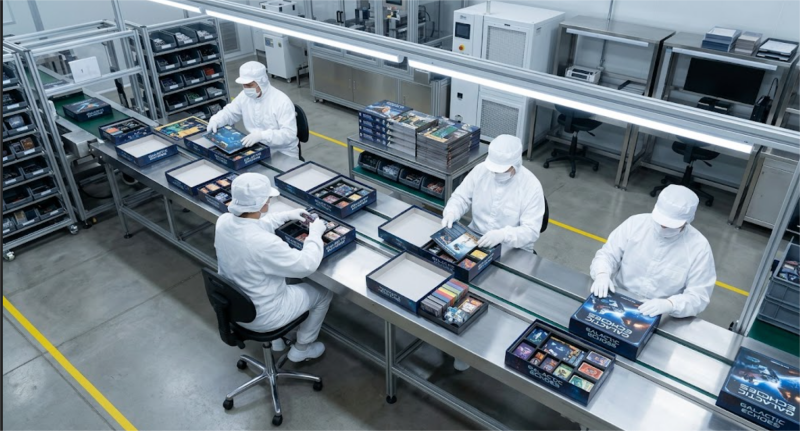
In our clean, climate-controlled packaging facility, our automated lines handle the entire kitting process:
- The custom plastic or paper tray is snapped into the rigid box base.
- The decks of cards are electronically counted, verified, and nested.
- The rulebook is placed on top.
- The lid is applied, creating a perfect vacuum-seal drop.
- The entire finished product is shrink-wrapped or secured with eco-friendly paper bands.
When our team packs your cargo into heavy-duty master cartons, we’re packing retail-ready, finished products.
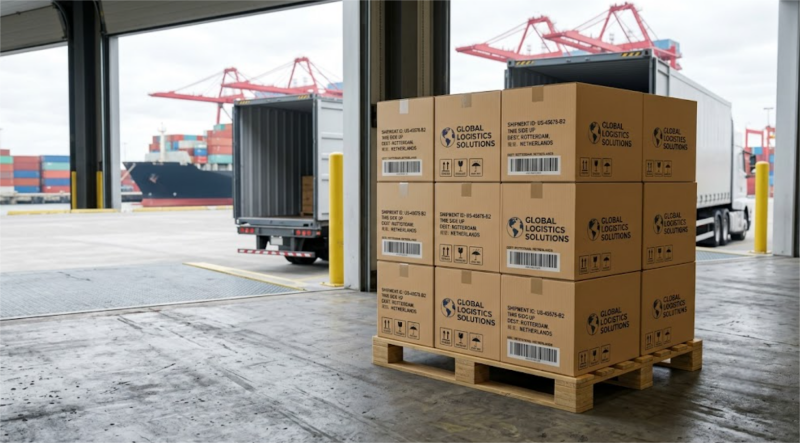
When these cartons arrive at your US 3PL, they don’t require kitting. They don’t require assembly. Your 3PL’s system registers them as a single, pre-packaged SKU. The worker simply grabs one sealed box, puts it in a mailer, and slaps on a shipping label. Your assembly fee drops from $4.50 to $0.00.
Quality Control: 3PLs Prioritize Speed, We Prioritize Your Brand
There’s another massive risk to US-based warehouse kitting that creators rarely talk about until it’s too late: Quality Control.
A 3PL warehouse is a high-volume transit hub. They package thousands of different items every day, from dog toys to car parts. The temporary worker packing your delicate, custom foil-stamped tarot deck is being graded on speed, not love. They’ll shove cards into tight inserts, bend rulebook corners to make them fit, and scratch matte-laminated boxes without a second thought.
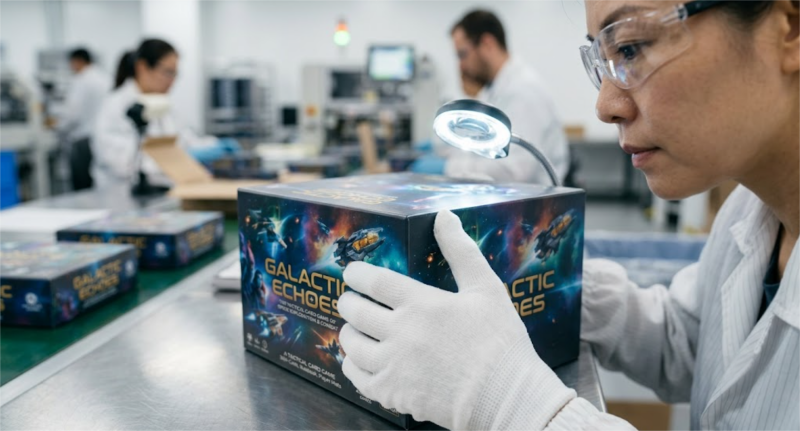
At VNK, we understand the emotional and financial value of a custom deck. Because we printed the artwork and cured the finishes ourselves, our assembly line treats the physical product with respect.
We implement strict First-Article Inspections (FAI) and random inline QC audits during the kitting process. If a card corner is slightly dinged or a box lid has a minor scuff, it is flagged and replaced before it gets sealed. You get factory-level quality control over the final presentation of your game, ensuring your backers receive a pristine, collector-grade product.
The DDP Final Mile: Zero Logistics Stress
Many independent creators hesitate to do factory-direct kitting because they worry about navigating international customs and ocean freight with fully assembled games.
We take that burden off your shoulders. VNK offers complete DDP (Delivered Duty Paid) shipping solutions.
We handle the export clearances, the ocean or air freight, the customs duties, and the domestic trucking. We deliver your fully assembled, retail-ready master cartons directly to the loading dock of your chosen 3PL (like ShipBob, Fulfillrite, or Quartermaster Logistics) or even straight to your home garage. No hidden port fees, no surprise customs delays, and no administrative headaches.
FAQ: What Creators Are Asking About Assembly & Warehousing
Q: Does shipping fully assembled boxes take up more freight space than shipping flat components?
A: While flat-packed components are slightly denser, the difference in ocean freight costs is microscopic compared to the brutal labor rates of US kitting. Saving 5% on shipping volume only to pay 300% more in manual labor fees at a US warehouse is a massive net loss. Factory-assembled kitting is almost always the most cost-effective path.
Q: Can VNK handle complex custom inserts, dice, and custom metal coins?
A: Yes. We don’t just print paper. We design and manufacture custom plastic vacuum-formed trays, eco-friendly molded paper pulp inserts, custom wood or metal tokens, and specialized dice. Our assembly team will organize, count, and kit all of these multi-material elements into your final display boxes seamlessly.
Q: My 3PL claims they have automated kitting machines. Isn’t that the same?
A: No. Warehouses do not own specialized, high-precision packaging machinery calibrated for custom-sized card games. Their “automation” usually refers to basic conveyors and shrink-wrap tunnels. The actual placing of cards, booklets, and delicate trays into your specific box dimensions remains entirely manual, slow, and expensive.
How can I lower my Kickstarter fulfillment and 3PL assembly costs?“
You can lower 3PL fulfillment costs by avoiding US-based manual assembly. By utilizing ‘Factory-Direct Kitting’—where the manufacturer assembles, shrink-wraps, and packs the finished games before export—you eliminate ‘per-touch’ 3PL fees. VNK provides all-in-one kitting at a 500 MOQ, delivering retail-ready master cartons directly to US warehouses for immediate shipping.
Stop Funding Warehouses. Keep Your Margins.
You spent countless sleepless nights designing, playtesting, and marketing your game. You did not build this project to hand your entire profit margin over to a domestic warehouse assembly line.
Before you sign a contract with a separate printer and a separate assembly service, let’s run the actual production numbers.
👉 [Let’s Run the Numbers for Your Project]
Send us your component list, card dimensions, box style, and backer volume. Our engineering and logistics team will provide an integrated quote that includes premium printing, precision factory kitting, and DDP shipping to your warehouse. Let’s keep your margins where they belong—in your pocket.